
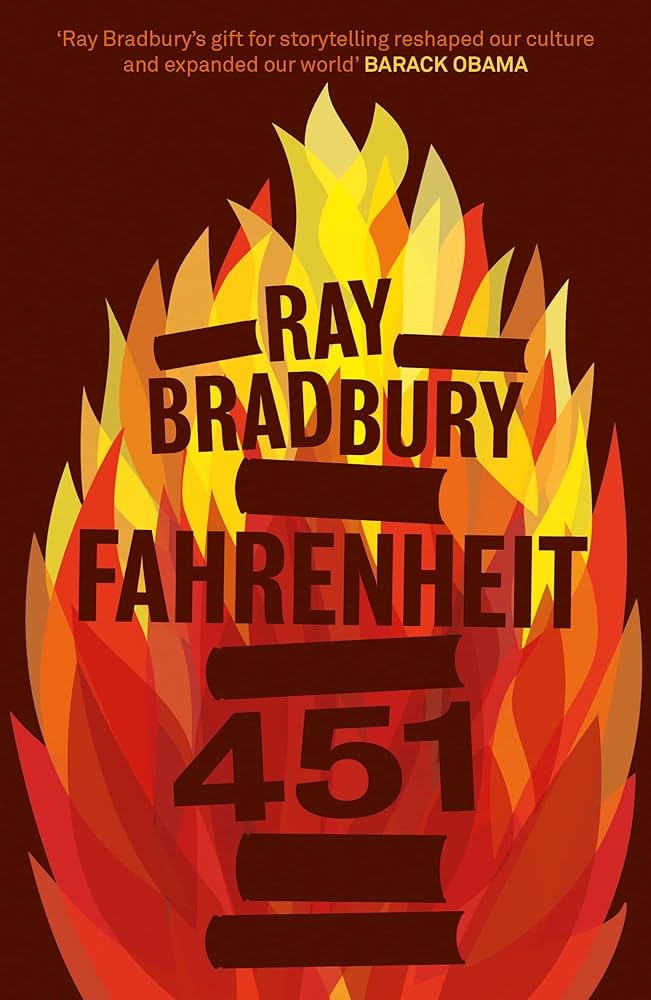
Synopsis:
Guy Montag is a fireman. His job is to destroy the most illegal of commodities, the source of all discord and unhappiness: the printed book.
Montag never questions the destruction or his own bland life, until he is shown a past where people didn’t live in fear and a present where one sees the world through ideas.
Montag starts hiding books in his home. Soon they’ll make him run for his life (Source: Harper Voyager Books)
Words That Burn for the Sake of Happiness!
Bradbury’s Fahrenheit 451 is an undeniable science fiction classic.
Written, like so many other dystopian novels, in a post-war age of uncertainty, Bradbury’s take on the genre is as dark as they come.
The author’s vision of a futuristic dystopian society takes place in an America where books are illegal and, in a place where everything is made to be fireproof, firefighters have become fire starters charged with keeping the population happy and unchallenged.
One such firefighter is Montag, the series’ protagonist. A seemingly happily married man, his worldview changes when a series of unfortunate events leads him to discover that books might have more value than just the words on the page.
Throughout Montag’s journey to question the perceived natural order, Bradbury reveals the litany of themes that underscore this acclaimed work. A point of contention and debate for many; not all of this novel’s themes are as well-worked as others after all, but it’s still hard to deny that Bradbury innately understood the workings of society’s majority.
Through the roles of each of the main characters, Bradbury posits that, so long as most are happy, content, and numb, they will go towards the path of least resistance until the mere idea of being challenged and questioned becomes the most disgusting thing in the world. A theme, given today’s circumstances, still holds a lot of weight.
Bradbury’s views on this side of society are most poignant, as the story shows the conflict between Montag’s old and new existences. The simple dictation of a poem drives him over the edge. It breaks him away from his coddled existence, leading to an outburst that forces him to plead with his wife and her friends to see the deeper reality of the words and feel something that isn’t the saccharine happy endings that take place on the TV screen, only for the majority to take hold and wash him away, still screaming.
Unfortunately, not everything in this novel is as revolutionary as Bradbury’s views on society. Fahrenheit 451’s world-building leaves a lot to be desired. Much like the lives of the characters themselves, it’s extremely insular. Beyond a scarce few paragraphs, the story gives little to no information on the world outside of the fictional city it’s based in. Nuclear wars come and go as if they were mere festivals, but it’s never said how or why the nation can stave off nuclear fallout.
Furthermore, and perhaps this is my own bias here, I’m not overly fond of Bradbury’s prose throughout the novel’s first half. Characterised by long, repeated sentences and descriptive language used to obfuscate, it detracts from the already gripping and unsettling truth at the story’s core.
Unapologetically dark and yet an undeniable classic, Fahrenheit 451 is an eerie glimpse into a dystopian future that still rings alarm bells to this very day.
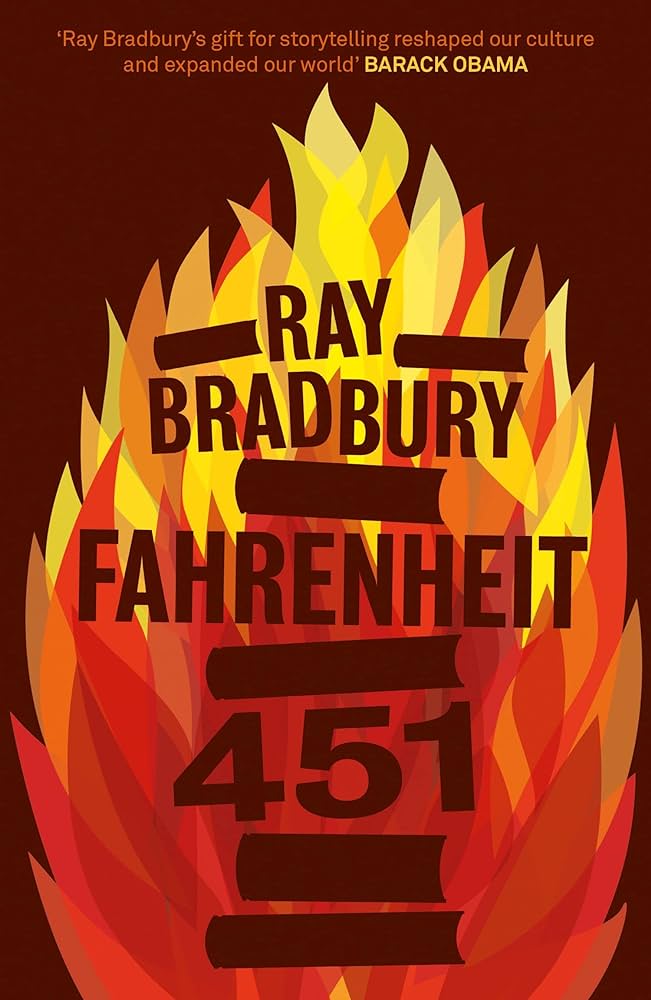
Fahrenheit 451
My Rating: 8.5/10
If you like what you read and what I do, why not consider supporting me through Ko-Fi. Any donation helps keep this site up and keep me writing.
Fahrenheit 451 can be picked up at most major online stockists.


 Faceless One Blog
Leave a comment