

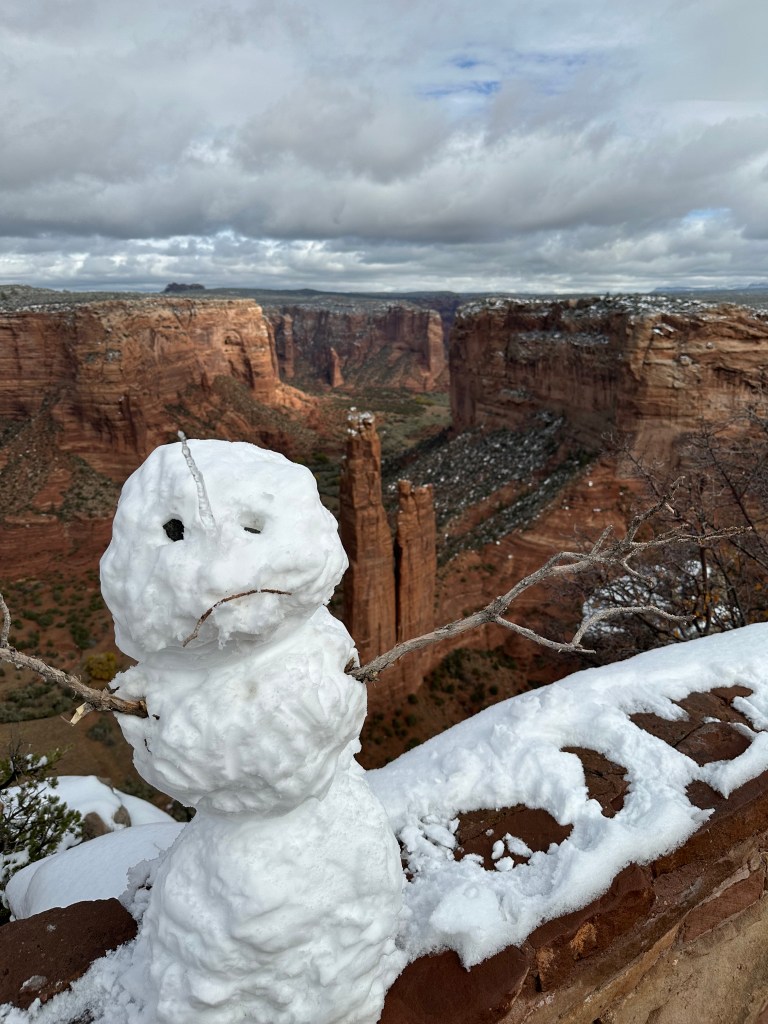
Leaving Phoenix behind in the desert haze, the American road trip began due north. As the Veteran’s Highway wound through the Verde Valley, the scenery started to change. Gone was the cacti-dotted desert, replaced by lush pine greenery and distant snow-capped mountains. My goal for the first part of the trip was to take a dive into the Four Corners region, unlocking its history, culture, and geography, beginning with Flagstaff.
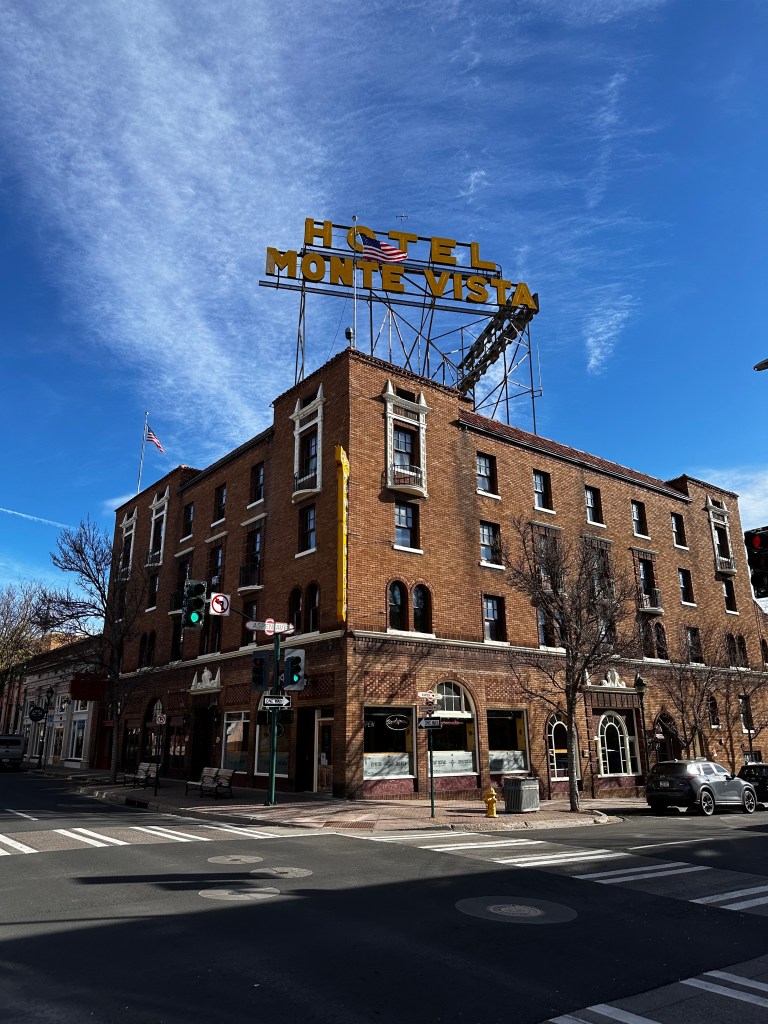
Nestled beneath the San Francisco Peaks, Flagstaff is mainly associated with Route 66. An old city by US standards, its welcoming neon signs, such as those of the Hotel Monte Vista and the Motel Du Beau, beacon visitors towards its well-maintained historic centre. Famed for its railroad, the tracks still play a key role today, and many visitors naturally flock to the central station in anticipation of watching one of the numerous transporter trains roll on through.
Flagstaff is more than just a quaint train-spotting location, as the city boasts of being a year-round destination with plenty of things to do within an hour’s drive. To the south, you’ll find Montezuma’s Castle National Monument, which plays host to a well-kept example of a Native American cliff palace. To the north, meanwhile, the landscape reveals the biggest of big-ticket items, the Grand Canyon. An attraction that truly lives up to the hype, even a day trip to this geologic wonder will leave you in awe of nature’s majesty.
While the Grand Canyon is deserving of its notoriety, what came as a bigger surprise to me was an attraction closer to the city. Recommended by a local gallery owner, Walnut Canyon National Monument is something of a hidden gem. Outside of peak season, you’ll essentially get the park to yourself as long as you’re willing to brave a little cold weather. Though the park is small, the hike down and around the canyon is rewarding as it offers some of the best chances to get up close and personal with some of the ancient alcove dwellings that lie within.
Continuing onwards from Flagstaff, the biting cold of the shoulder season gave way to more unpredictable weather. Flurries of snow derailed a potential visit to the Petrified Forest National Park, changing instead to a stop-off at the Hubbell Trading Post on the outskirts of Ganado.
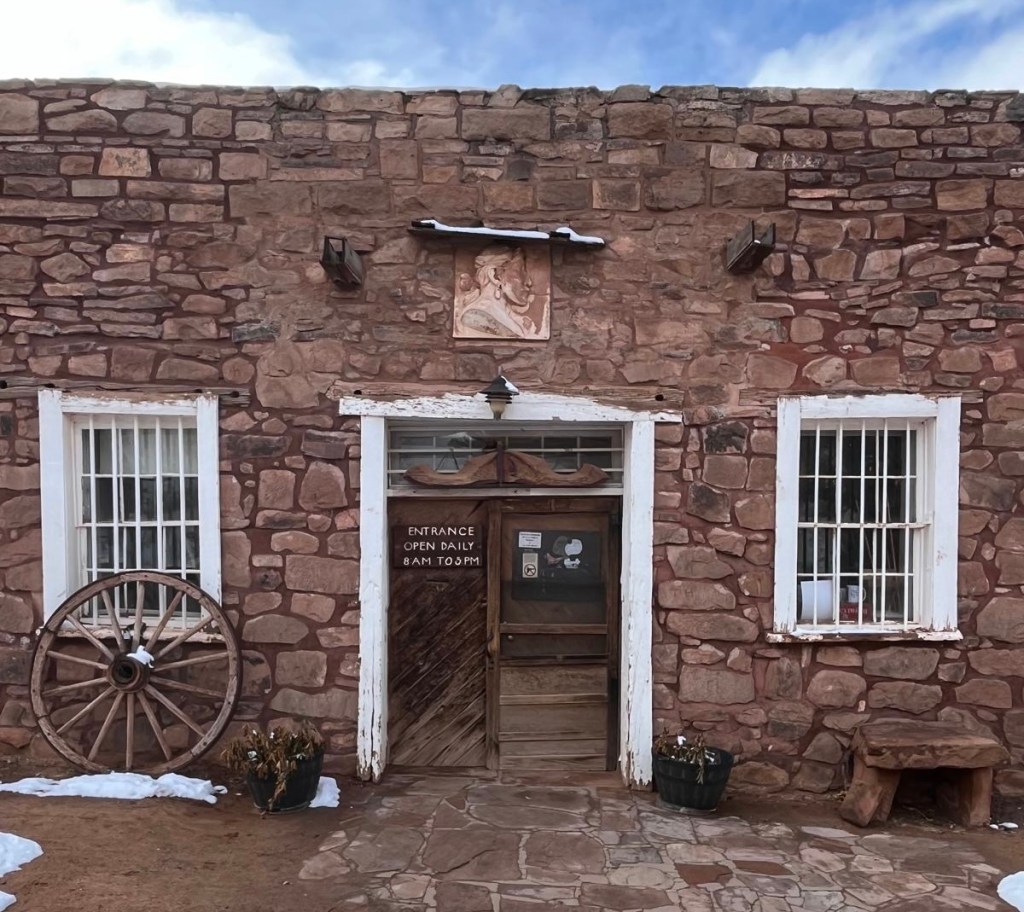
Long seen as a place of peace within the reservation, the post fostered much-needed friendly relations between Navajo and Americans through trading. Even today, the post remains a business as well as a historic monument and offers an interesting selection of Native American art, crafts, and rugs.
The history between natives and the Americans is as complex as it is tumultuous. While the Hubbell Trading Post is a rare spark of light into the darkness, the reservation land still bears the scars of America’s early growing pains. Even now, the societal disparity can be felt across the reservation.
Whilst in the region, Chinle became my base of operations. A typical reservation town, its crumbling roads and inadequate water systems lay bare the continuing social strife that exists within the hegemonic power. What Chinle lacks in luxuries, however, it makes up for in community spirit. The town has a real heart, often found at its liveliest as locals enjoy a meal at the Junction restaurant.
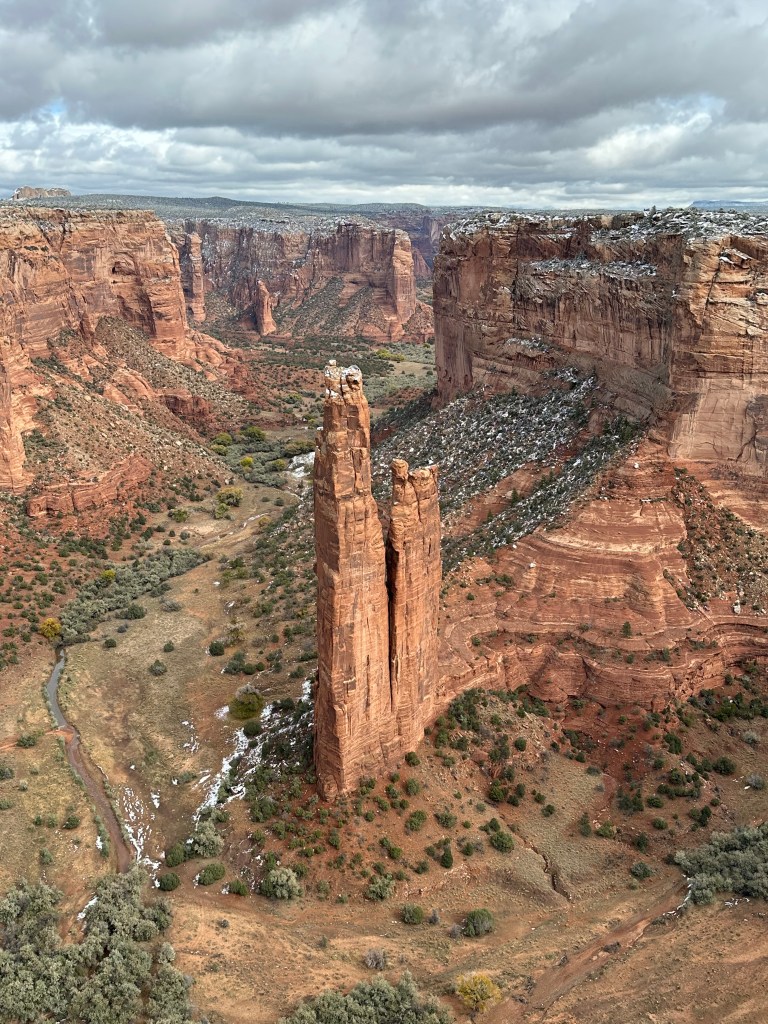
Aside from being a great way to discover reservation life, Chinle also happens to be the gateway for Canyon de Chelly National Monument (pronounced Tseyi). As America’s second-largest canyon, it’s no less impressive than its nearest rival, the Grand Canyon. Receiving few visitors during the winter months, the monument’s quiet solitude, aside from the occasional Cottontail, allowed for a true appreciation of the many spectacular sites as well as a moment of reflection on the Navajo’s traumatic past.
Not far down the road lies the town of Fort Defiance, the starting point of the Long March. While little remains of the event there, the solitude of de Chelly’s canyons relays the horrors the Navajo suffered at the hands of Kit Carson and General James Carleton, who used scorched earth methods to forcefully migrate the Navajo from their homeland.
Echoes of America’s ancestral past can be found across the Four Corners region. Travelling north, the Colorado borderlands make way for the spectacular Mesa Verde National Park.
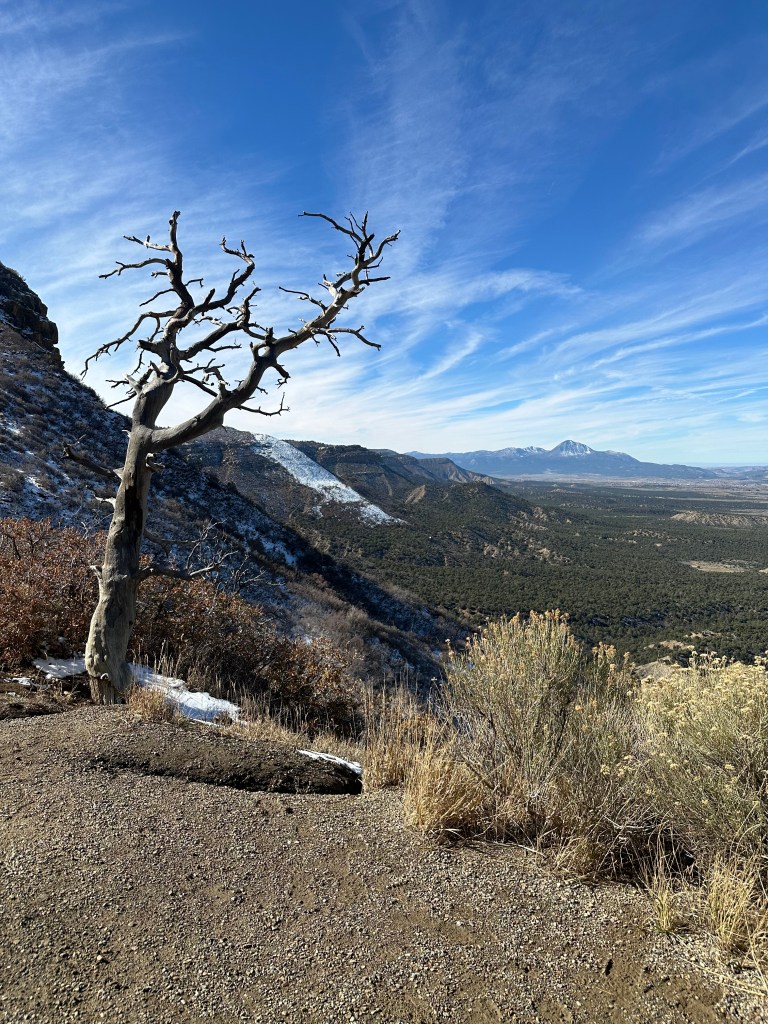
A site deserving of its lofty status, a long, winding road takes you past several jaw-dropping canyon vistas before arriving at some of the best-kept cliff dwellings in the country. Less melancholic than de Chelly, these dwellings are accented by hopeful resonance thanks to the Hopi tribe’s tradition of leaving somewhere in anticipation of an eventual return.
If you enjoyed this type of content, please consider liking this post and commenting down below to let me know your thoughts!




 Faceless One Blog
Leave a comment