

A cosmic joyride revisited!
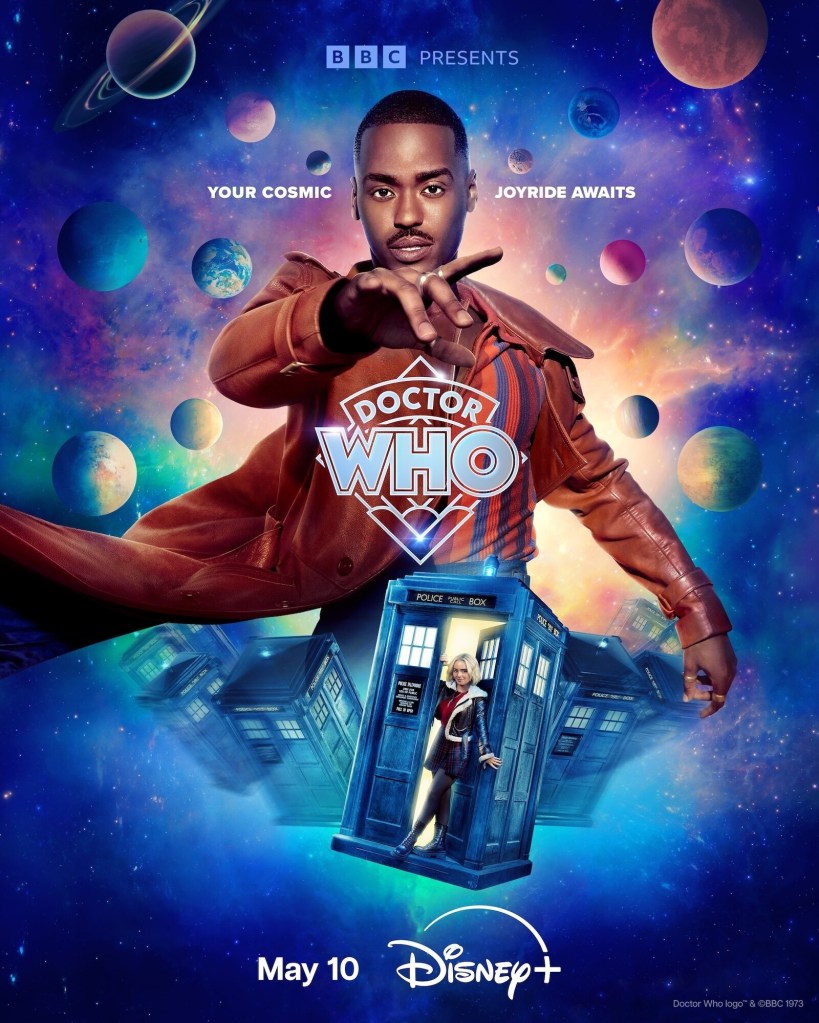
Up until recently, Doctor Who had found itself failing to answer the question of who would take up the reins. Significant delays due to COVID saw Chibnall deciding to leave alongside Jodie’s 13th Doctor, leaving the series without a lead or a showrunner. With everything up in the air, hope for the show’s future came from a familiar face, Russell T Davies. Architect of the show’s modern revival, his announcement as showrunner for the new series brought glimmers of a brighter tomorrow.
Fast-forward to 2025, and Doctor Who’s second season is about to begin. However, not everything has been plain sailing. RTD’s first season, starring Ncuti Gatwa as the 15th Doctor and Millie Gibson as Ruby Sunday, garnered mixed reviews and started the rumour mill again at full pelt. But where does the season stand as its own entity?
Revisiting the series in anticipation of the new season’s premiere at the end of the week, this retrospective will look at season one with fresh eyes to determine what went right and what went wrong…

Episode by Episode
The 15th Doctor and Ruby’s adventures consist of an eight-episode season and a special, and like most seasons of Who, it has a mixed-bag story quality.
The Church on Ruby Road and Space Babies serve to commence their time and space travel journey together. They focus heavily on introducing Ruby to the wonders of the universe and introducing the audience to the wonders of Ruby as a companion. While these episodes succeed in creating the foundations of a relatable and likeable companion, story-wise, these are on the rougher side of the spectrum. Both episodes are thin on plot and ultimately hinge themselves on goofy concepts that don’t translate well on screen.
Being freed from the shackles of introductions improves the story quality during the season’s midpoint. At this stage, the show opens itself up to explore more crazy, complex, and experimental storylines, featuring everything from a world without music (The Devil’s Chord) to a war kept alive due to faith (Boom).
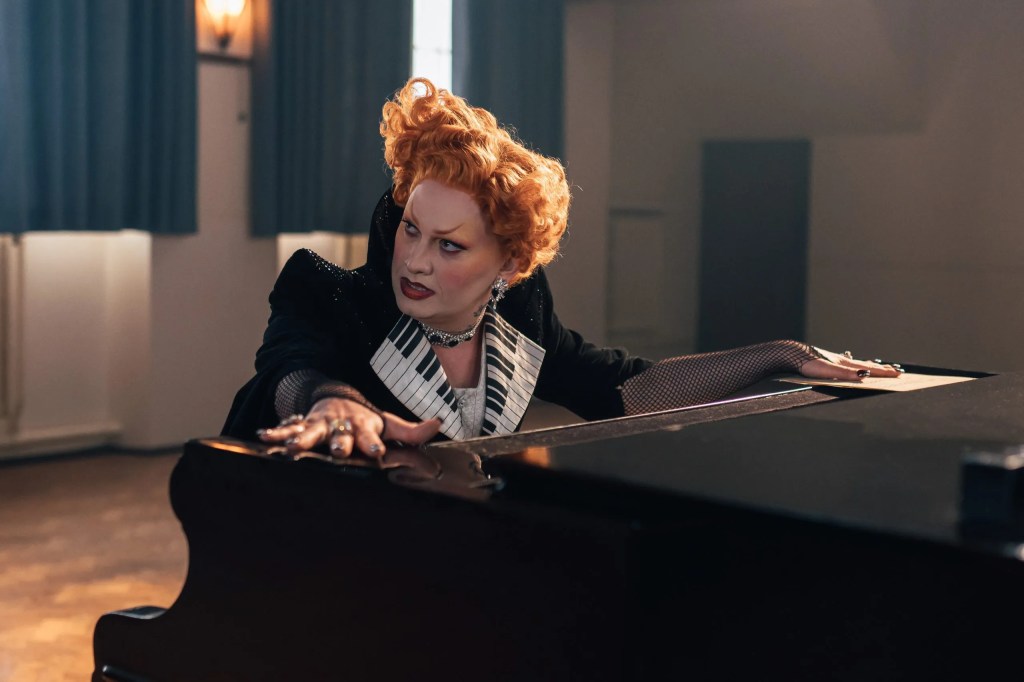
These strong stories reach their apex with 73 Yards and Dot and Bubble. More experimental and Doctor-lite, they stretch the boundaries and create vividly imagined alien worlds and are rewarded as a result.
Unfortunately, the season’s climax (The Legend of Ruby Sunday and Empire of Death) is unable to keep the strength of the midpoint going. Focused on resolving the season-long arc, it gets caught under the weight of its own hype. As a result, the final twist of the series fails to land, and the only satisfying conclusion comes from Ruby’s decision to leave the TARDIS and return to a semi-normal life.
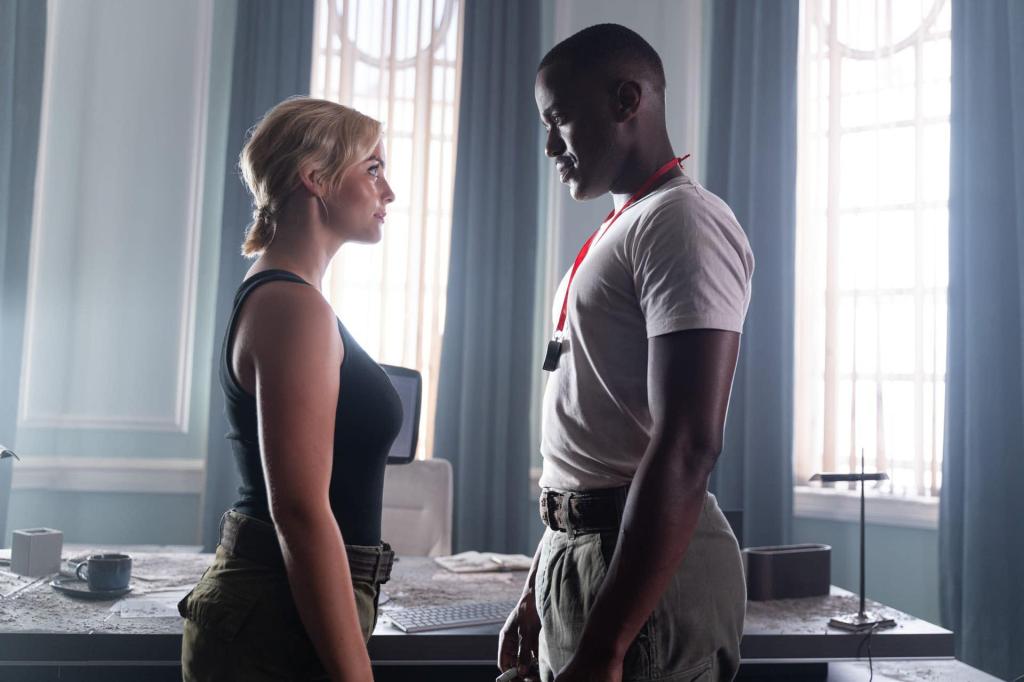
The Doctor and Ruby
Alongside adventures in space and time, every season features a pairing of a Doctor and companion whose dynamic and character develop as the season progresses. This season features Gatwa’s charismatic and personable 15th Doctor alongside Millie Gibson’s Ruby Sunday, a young woman ready to step out into the world searching for her birth mother.
In the grand scheme of regenerations, the 15th Doctor is more human than most, recognising the loves and losses of humanity better than those who’ve come before him. Gatwa’s Doctor also comes with less Time Lord baggage, having gone through therapy as a result of the 60th special’s bi-regeneration. With this fun and fancy-free version of the Doctor, however, some problems begin to spring up throughout the season.
Despite Gatwa’s clear ability to play The Doctor, he’s never given enough interesting material to sink his teeth into. The series takes this new Zen version of The Doctor too literally. Throughout the season, there are very few moments where The Doctor has to face up to their own morality or are questioned by the consequences of their actions. It leaves everything to be explained by off-camera actions or to remain at surface-level exploration.

These off-camera explanations are found elsewhere within the season but are especially prevalent between The Doctor and Ruby’s dynamic. Aside from the introduction and finale, The Doctor and Ruby spend sparingly little time together. While this was unavoidable due to the actors’ conflicting schedules, it results in their friendship developing outside of the stories on screen, culminating in disjointed growth.
Their dynamic together also comes across as one-note. Much like Gatwa’s Doctor not being given enough layered material to work with, the same occurs in the relationship between The Doctor and Ruby. As the season progresses, their dynamic fails to progress alongside it due to a lack of conflict between them. The season never has a moment where the pair disagree. There’s no moment where Ruby questions the Doctor’s actions or calls him out on his judgment. Likewise, the reverse isn’t happening either. There should be moments where the companion goes off on their own and gets mixed up in something that the Doctor has to reprimand them for. One of them is an alien who has lived for thousands of years, and the other is a human. They need a difference of opinion between them. Without it, the season constantly feels like something is missing, and all the stories suffer as a result.

Unlike The Doctor and their dynamic together, Ruby is one of the few aspects that come out at the end of the season, well-rounded and with a proper character resolution. In truth, the season has a much tighter focus on her character arc than anything else. The young woman who’s about to step out into the world whilst still searching for the mother who abandoned her underpins her actions throughout the season.
This consistency continues as the season progresses. Her character and willpower are tested in episodes such as 73 Yards. Forced into a situation where the Doctor has no hope of rescuing her, she has to dig deeper than ever before to find a solution. These moments take Ruby on a journey to confront her innermost insecurities, resulting in character growth. Ultimately, these moments of growth help her within the season’s finale, where she accepts her family’s past and decides that her continuing journey should be away from The Doctor and TARDIS and focused on more down-to-earth matters.

There’s Always a Twist at the End
Since 2005, every series (except series 11) has added one more element to their cosmic joyride throughout space and time. Each series has added an overarching story arc that works like connective tissue, building up over time and contributing to creating a climax filled with shock and awe.
For RTD’s first season back in charge, the overarching plot focuses on Ruby’s search for her birth mother and the mystery behind why nobody can identify her. It’s a simple enough premise that, as the season progresses, it adds more twists and turns as it goes along. By the eventual reveal during the finale, the plot has added suggestions that there’s more to Ruby than meets the eye, having the ability to make it snow regardless of the weather. It also adds that there’s a strange woman following them throughout the universe and that even the gods themselves are unable to deduce the circumstances behind Ruby’s birth and who her mother is.
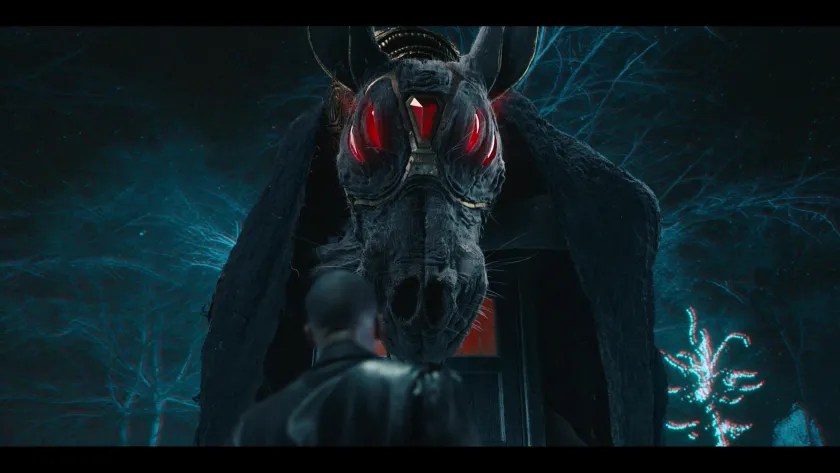
The expectations for this intriguing mystery’s reveal by the end of the season are suitably massive; after all, even higher beings are on the edge of their seats, waiting for the answers. What we’re given as an explanation, however, is one giant rug pull. The truth behind the mystery is that there is no mystery at all. Ruby’s mother is just an ordinary human who fell on hard times, and the mystery box is all a figment of Sutekh’s insatiable need to know the unknown.
Reception towards this reveal amongst the community was controversial, to say the least, and whether or not there’s any way to pull off a rug-pull successfully is still up for debate. However, this season definitely didn’t pull it off.
Conceptually, the idea of using an audience-insert villain whose thirst for answers drives their very existence is unique and interesting. Unfortunately, the season never uses this concept to its greatest effect. By the time the climax comes around, it’s clear that this point is only ever vaguely hinted at and is only made worse by using an already-established villain whose motivations are already well-understood.
Moreover, the reveal leaves more questions unanswered than answered. The theatrics involved on the night that Ruby’s mother abandoned her and the reasons why Ruby can make it snow are never revealed. These leave the series ending on a puzzling conclusion and an inevitable weakening of some of the season’s more arc-involved storylines. Something that ultimately affects the rewatchability of the season.
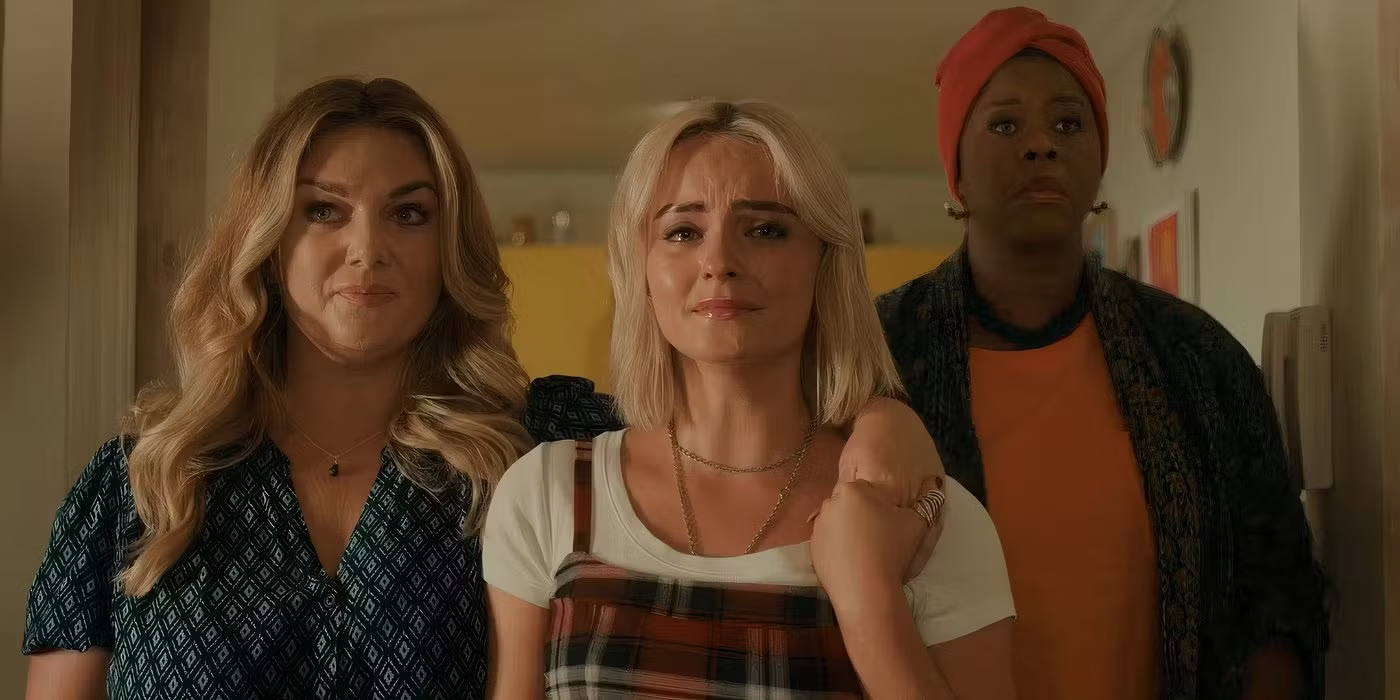
Coming at this season again with some distance from its original broadcast has helped to put it into perspective. Undoubtedly, the individual stories from this season, despite still being a mixed bag, are an improvement over the offerings provided during Chibnall’s era as showrunner. Stories such as 73 Yards and Dot and Bubble, both experimental in nature, have proved that the series still has what it takes to tell interesting and unique spectacles.
Looking at the season in greater detail, however, it is clear that this new version of Doctor Who has its teething problems. With a shortened episode count and conflicting schedules, some critical character moments and dynamics have fallen by the wayside. The 15th Doctor and Ruby’s Doctor-companion relationship is the biggest victim of these cuts, as their progression together fails to add any sort of conflict or consequences to their decisions, leaving a one-note impression.
There are also problems to be found within the season’s arc. The unsuccessful rug-pull left more questions than answers, weakening arc-heavy episodes and weakening the overall rewatchability of the season. Luckily, there is hope for the future. The trailers and promotional material for the series’ second season look promising and look set to provide more interesting experimental adventures.
I Give Doctor Who Season 1: 6/10
 Faceless One Blog
Leave a comment