
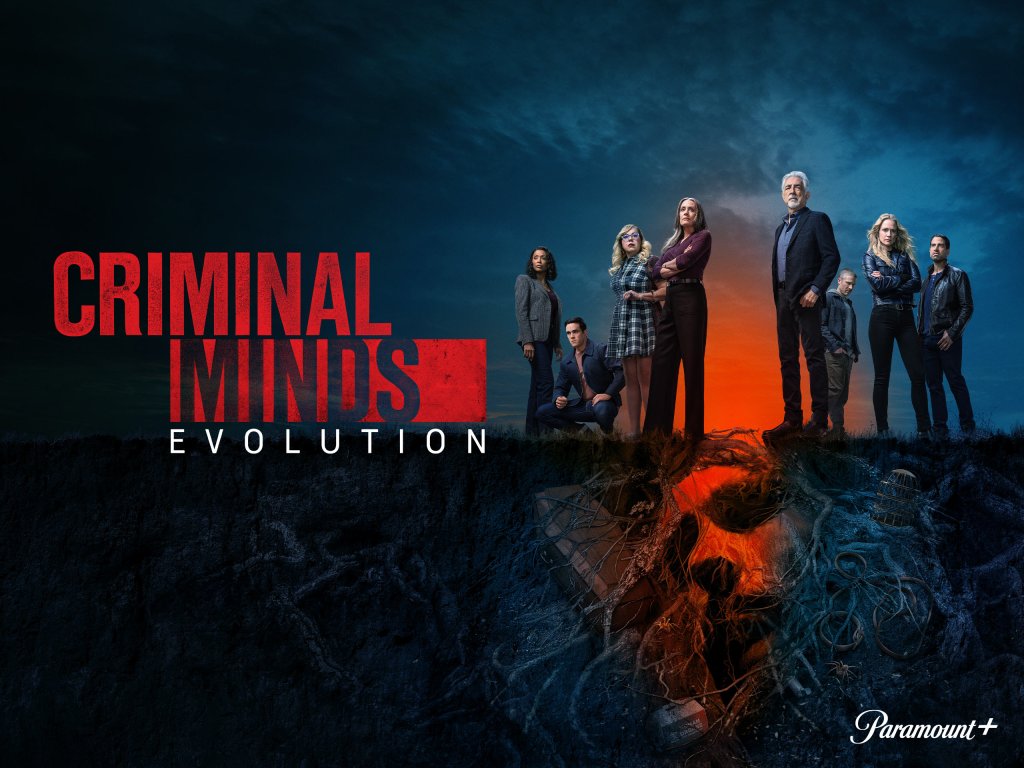
Ever since Criminal Minds jumped from network television to streaming, its output has been mixed. Under the Evolution tagline, its first season hit the ground running, offering a tighter arc and an interesting mystery surrounding the idea of what serial killers would do in the face of a pandemic. On the face of it, it looked like the series had successfully bridged the gap in episode count with a heavier focus on narrative storytelling. Its sequel, however, could never quite reach the benchmark set by its revival. While developing the original idea from its first season, it left plenty of room for improvement as it fell under the weight of its growing “Gold Star” conspiracy.
It is only natural, then, that I was apprehensive going into Evolution’s third season. Continuing to develop the pandemic storyline in a new form, this season still feels the pressure from its belated arc, only to bring it back with its somewhat final conclusion.
Season 3 Sees Voit Take on a New Role
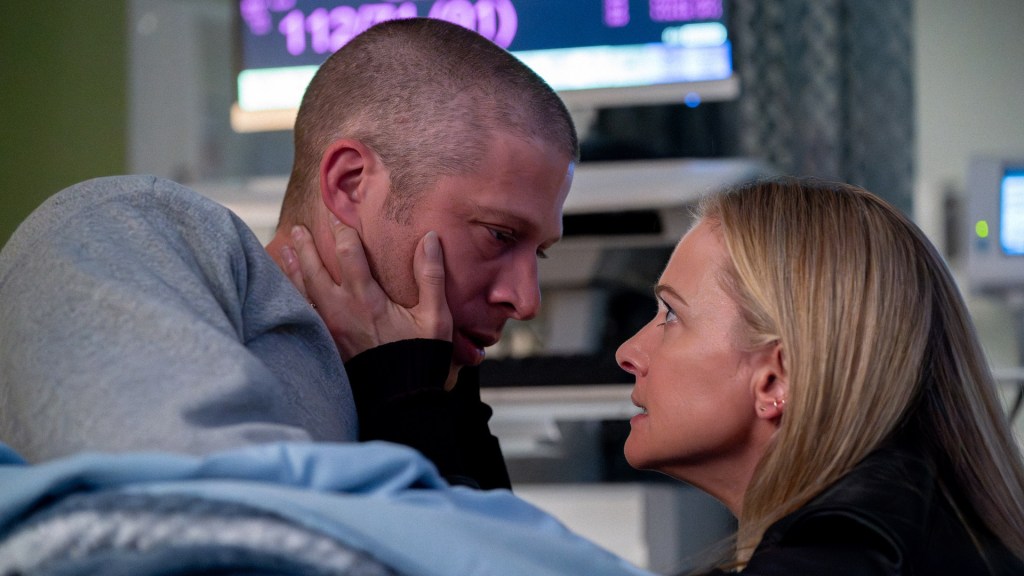
In the third season, the team at the BAU are still suffering at the hands of Elias Voit’s network of serial killers—except this time, there’s one notable difference. Following the attack on Voit during last season’s cliffhanger, he now has amnesia and no longer has the same psychotic tendencies. This is bad news for the team, as they need his memories to unlock the secrets behind a new threat that calls itself The Disciple.
Manoeuvring through Voit’s broken mind to get closer to this new threat, the story arc for this season is cliché, to say the least. Amnesia stories are a dime a dozen, and Criminal Minds’ latest series does little to add to the genre.
Where it manages to keep its head above water, however, is Zach Gilford’s performance as Voit. As the budding psychopath, Gilford was always able to sell his performance and could stand toe-to-toe with seasoned profiler David Rossi (Joe Mantegna). As the innocent amnesiac, Gilford’s softer impressions are persuasive enough to the point where even I was starting to forget the horrible things he’d done not one episode ago.

Despite Voit’s character being a standout this season, he’s still not enough to save it from messy storytelling. While narrative storytelling tends to be a little disjointed, this season’s story arc feels like it’s more than that. The biggest problem comes at the expense of its main villain, The Disciple.
A killer with personal connections to Voit, the story purposely keeps all the reveals and motivations surrounding their character to the very end, choosing instead to focus on other members of the serial killer network. Inevitably, this doesn’t translate well when the entire premise of the season hinges on the two of them meeting and interacting. Unfortunately, this leaves the arc on a rather lacklustre ending.
For Better or Worse, Death and Healing Play a Big Role
While this series has problems creating a satisfying arc, it does have better luck with its themes. Death and the need to heal play a big role, not only in Voit’s story, but with several members of the BAU team as well.
In a shocking start to the season, JJ’s (A.J. Cook) husband and long-time guest star of the show, Will (Josh Stewart), dies suddenly. Throwing JJ through a loop, it offers some of the series’ best emotional character work as she deals with a grieving mother-in-law, as well as her own swirling emotions. It also ties in nicely with Voit’s arc, as she uses her experiences to unlock some of his darker memories.
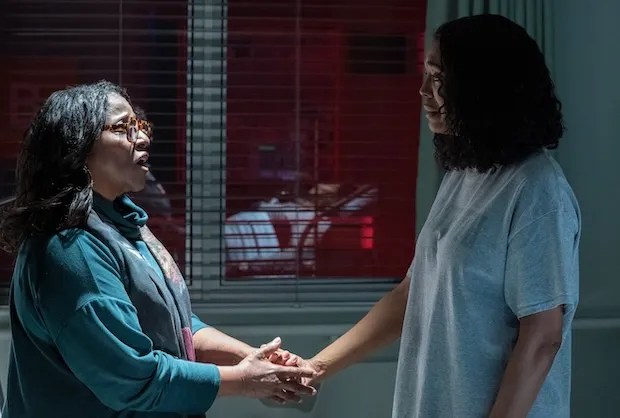
Tara (Aisha Tyler) also has a brush with death during this season. Severely injured after a shooting, she spends an episode between life and death examining her life so far with the help of her dead mother. In contrast to JJ’s emotional experience, Tara’s trials from the beyond never manage to strike the right chord. Despite the severity of the situation, never did I believe that Tara was in any danger of dying. Moreover, I didn’t connect with the emotional beats of the story, as they required remembering plot moments from several seasons ago.
The End of Voit’s Story is a Good Thing
Although there are several messy elements to this season, there is one thing about its conclusion that is praiseworthy—it presents the end of Voit’s saga. Having enjoyed his escapades over Evolution’s three seasons, it’s fair to say that by the end of this season, Voit’s potential had started to run a little thin. Changed or not, admitting to his crimes and being sentenced to life in prison brings with it a sense of satisfying finality.
After all, the end of Voit’s story can only be a good thing for this series. There are still plenty of different avenues the showrunners can take the team at the BAU to next. Most importantly, I hope they use what they’ve learnt from Voit’s saga to polish the series’ new, adopted form of storytelling.

Much like with season two, Criminal Minds: Evolution’s third season offers a mixed bag of positives and negatives. While Voit and JJ are given some of the series’ best character work in a decade, they are inevitably undercut by a slew of messy storylines that added little to the conclusion. Fortunately, season four can open onto a fresh new outlook, with this season seeing the conclusion to Voit’s exploits.
My Rating: 7/10




 Faceless One Blog
Leave a comment