Marking just over a year since I started writing travel blogs and articles, I’ve decided to create a new series of regular travel blogs. Entitled Snapshot Stories, they are going to be a little more of an informal affair, focusing on using a singular image to spark descriptive and informative writing. As a new series, I’d welcome any type of constructive feedback you guys have to offer.
To start the series off with a bang, I’ve opted for a part of my three-week American road trip that has only seen a passing glance up until now: S’edav Va’aki.
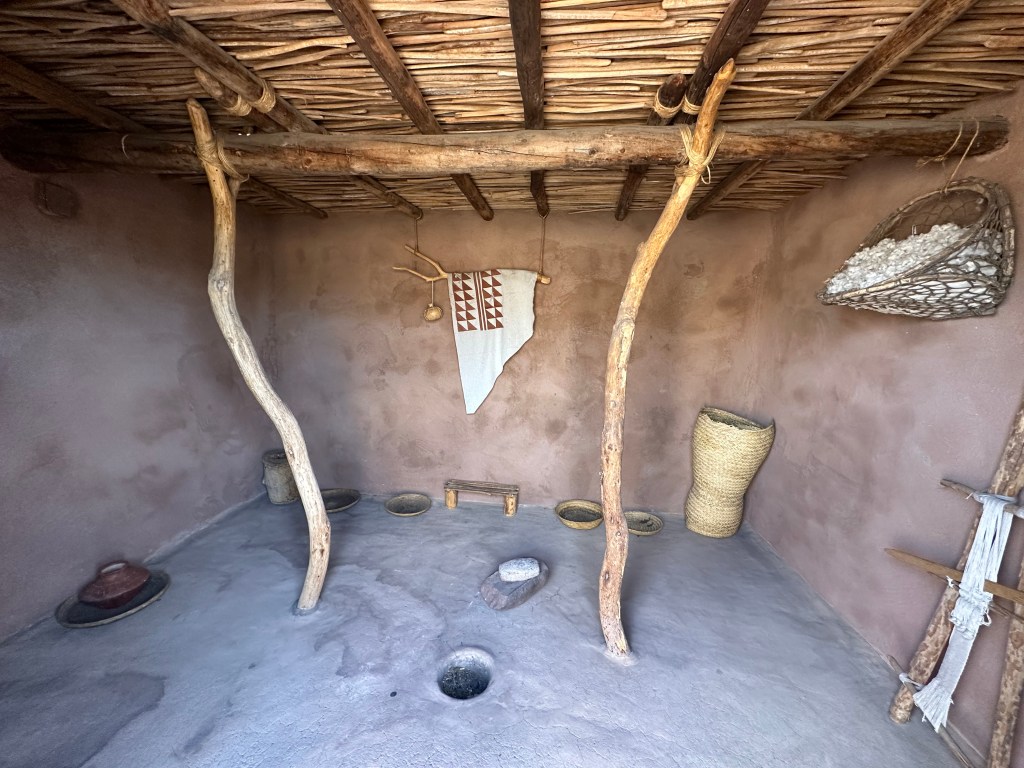
(1) Recreations from Grande Pueblo
Despite travelling regularly, I always find the day of my return flight to be equal parts boring and nervy. Anticipating a long-haul flight back from Phoenix that wasn’t until later in the day, this was especially true. With the hotel checkout time not nearly late enough to justify going straight to Sky Harbour, it meant that I needed something to wile away the hours. Not wanting to travel too far away from the airport, however, this left the number of options open to only those close at hand. Fortunately, being located just outside of Phoenix’s downtown, Sky Harbour bucks the curb on dull airport areas.
After short consideration, the S’edav Va’aki museum, formerly known as Pueblo Grande, made for an obvious choice. Located just minutes away from the airport, it instantaneously filled a lot of the requirements. More importantly, though, this museum felt like the perfect bookend to a trip that focused on Native American history.
Translating to mean central ceremonial house, the museum gets this name thanks to its proximity to the nearby Salt River Valley and the canal system that the early settlers devised to survive in the region. With no large structure to centre itself, like the numerous national monuments around Arizona that brighten its already beautiful landscape, it’s best to think of this museum as the open-air kind. Around its rather large courtyard, the museum offers several recreated Hohokam dwellings (as pictured above), which are great for understanding how the original settlers of the land lived over 1000 years ago. The courtyard doesn’t just have recreations, however, as the original archaeological discoveries of the Platform Mound and Ballcourt can be seen.
(2) A Flying Reminder

The distant noise of a passing jet engine, a not-so-subtle reminder of the impending end of my three-week-long trip.
S’edav Va’aki’s Platform Mound doubles as a great spot for some plane spotting. Waiting for the next flight to pass by, it’s difficult not to make comparisons with how far we’ve come but also the amazing achievements performed in their time. Managing with only wooden and stone tools, the peoples inhabiting the Sonoran Desert constructed the New World’s largest prehistoric canal system. Able to irrigate crops in even the harshest desert environment, its foundations are still used today as part of the more modern Euro-American design.
(3) A Bird in the Bush

They say that “a bird in the hand is worth two in the bush,” though in this case I certainly would’ve preferred a clearer picture of the one in the bush. With its glimmering golden eye, which I failed miserably to capture in still, to this day I still have no idea what bird species this was. Despite being nestled within the branches of a Cholla, its looks caught my attention immediately.
While out and about exploring the very best bits of nature that this region had to offer, this bird was one of many fleeting encounters that will remain a mystery. The Saguaro, too, shared similar encounters. Much like this bird pictured above, a second’s glance out of a car window was all that was needed to memorise the striking jet-black plumage of a bird that perched atop an unusually large Saguaro cactus. For all I know, these could be common sightings, but they were special, nonetheless.




 Faceless One Blog
Leave a comment