
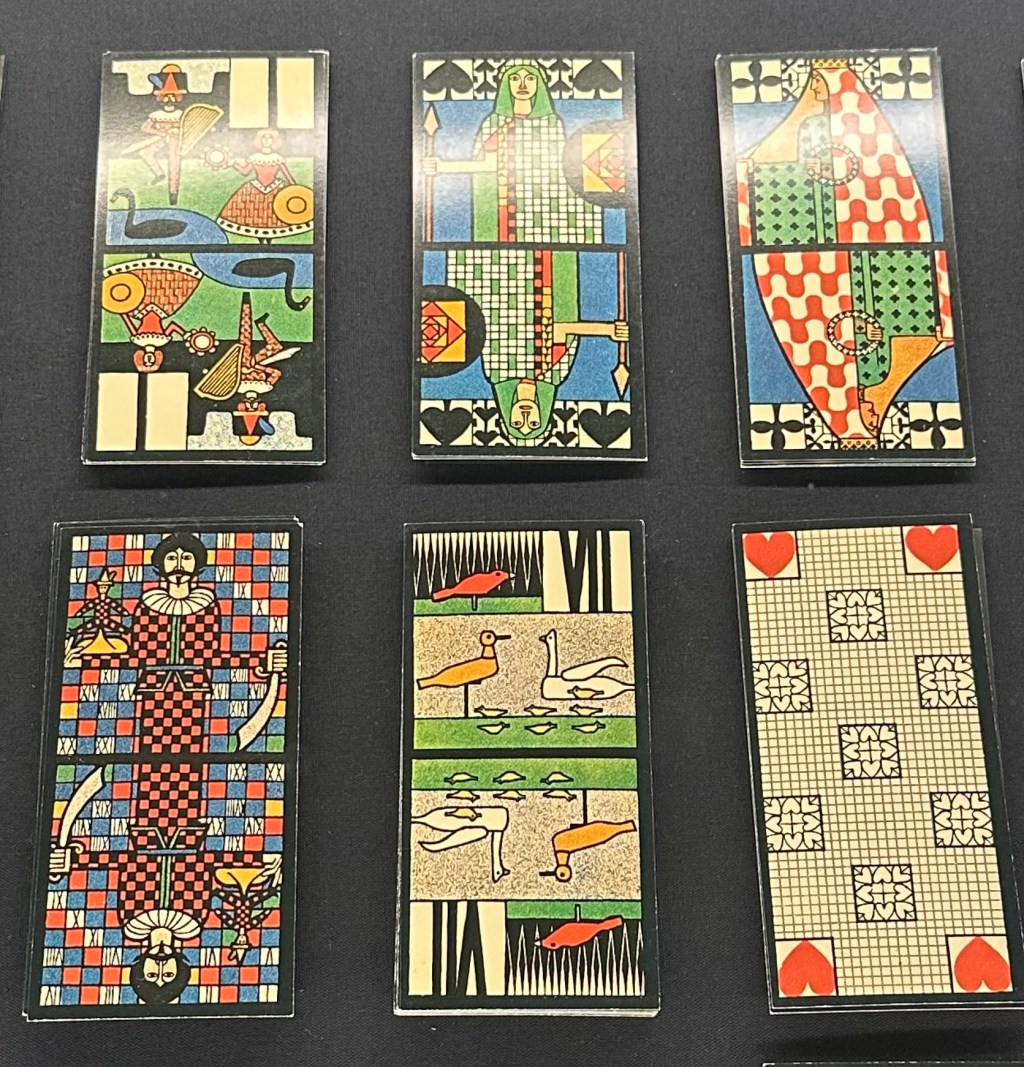
1) Ditha Moser’s Tarok Cards
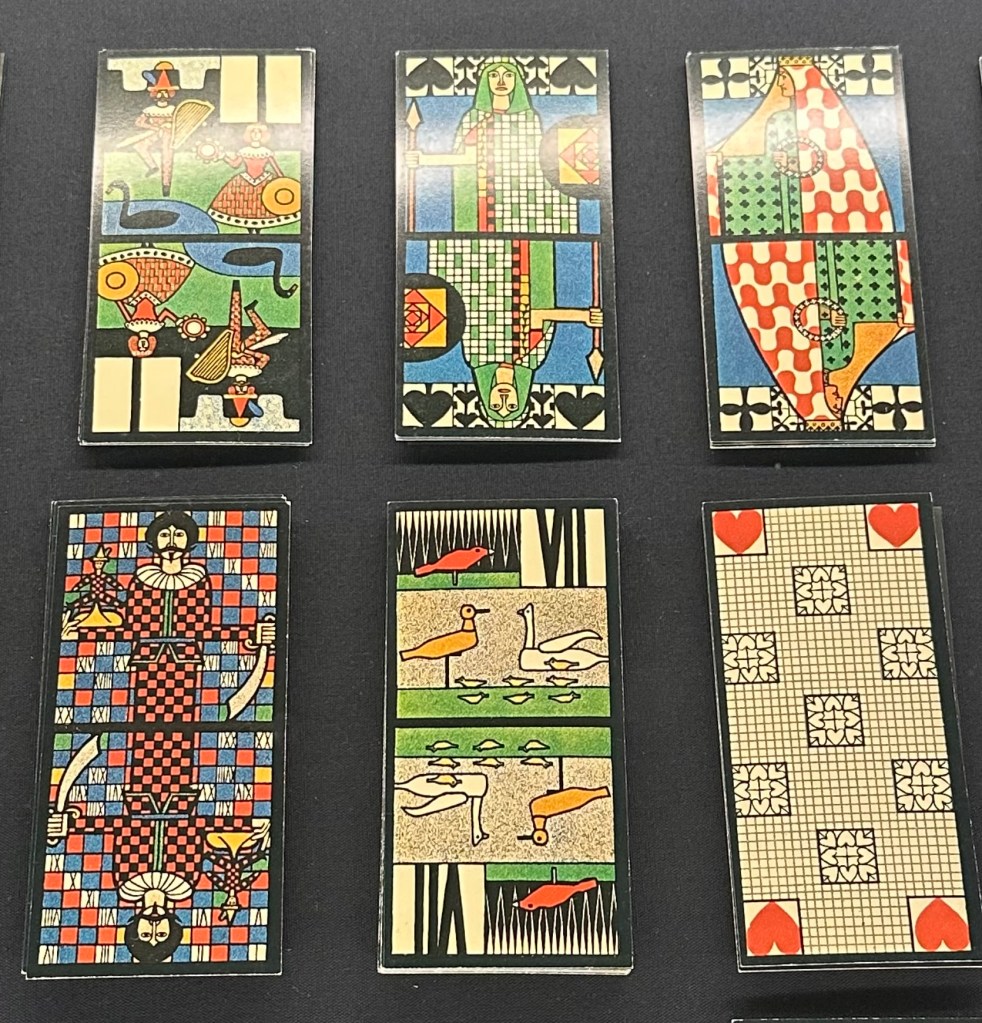
The Leopold Museum is a shrine to the Secession, one of Art Nouveau’s most recognisable movements. Proudly displaying the works of artistic giants such as Klimt and Schiele, it is a Mecca for early 20th-century enthusiasts. What grabbed my attention, however, wasn’t one of the paintings hung on the wall or the bits of furniture adorning the various rooms. Instead, my fascination came within a small, glass cabinet, where twelve neat and colourful bookmark-shaped designs were on display. These were the tarot cards designed by Ditha Moser.
Moser was not a well-known member of the Secession, with what few works she created often overshadowed and forgotten. As if mirroring her artistic career, her tarot cards are also overshadowed within their exhibition room, and yet, they are captivating and represent an important slice of history.
Inspired by Moser’s childhood, the tarot card’s designs are a prime example of Jugendstil. The primary source of Art Nouveau in Germany and Austria, her work represents the movement due to its emphasis on straight lines and simple, organic shape formations. Despite falling in love with the creation, I was disappointed to discover that the Leopold’s gift shop (and Vienna, more widely) had nothing in it to represent her work.
2) Klimt’s Kunsthistoriches Fresco
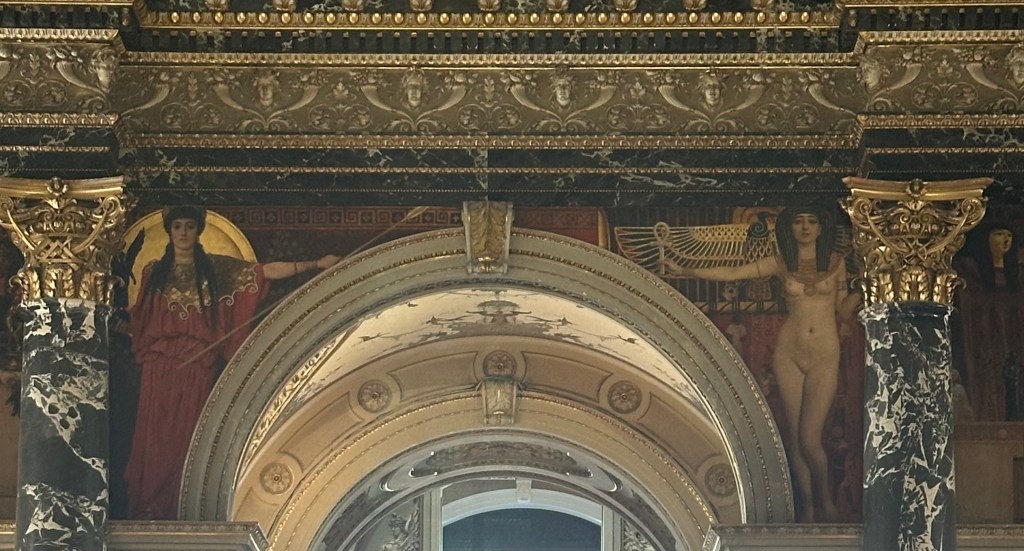
Even among Vienna’s many palaces and locations associated with the Habsburg royal family, the interior of the Kunsthistorisches Museum is known for its excess. Marble for as far as the eye can see and an odyssey’s worth of heroic-style statues perfectly characterise an enclosure for the royal family’s art collection. Within this palace, almost as beautiful as the Renaissance pictures kept on its walls, the one thing you wouldn’t expect is a fresco that comes straight out of the Art Nouveau movement.
Hanging high above the museum’s last level of stairs is the fresco of two women, one Grecian, the other clearly meant to be some sort of Egyptian goddess. Completed in 1891, they are the works of the famed Austrian modernist, Gustav Klimt. During my visit, these were the only works of his that were easily visible. The rest can be found high above the rafters, but my phone camera never had a chance to get close.
3) Schoenberg’s Easel and Paints
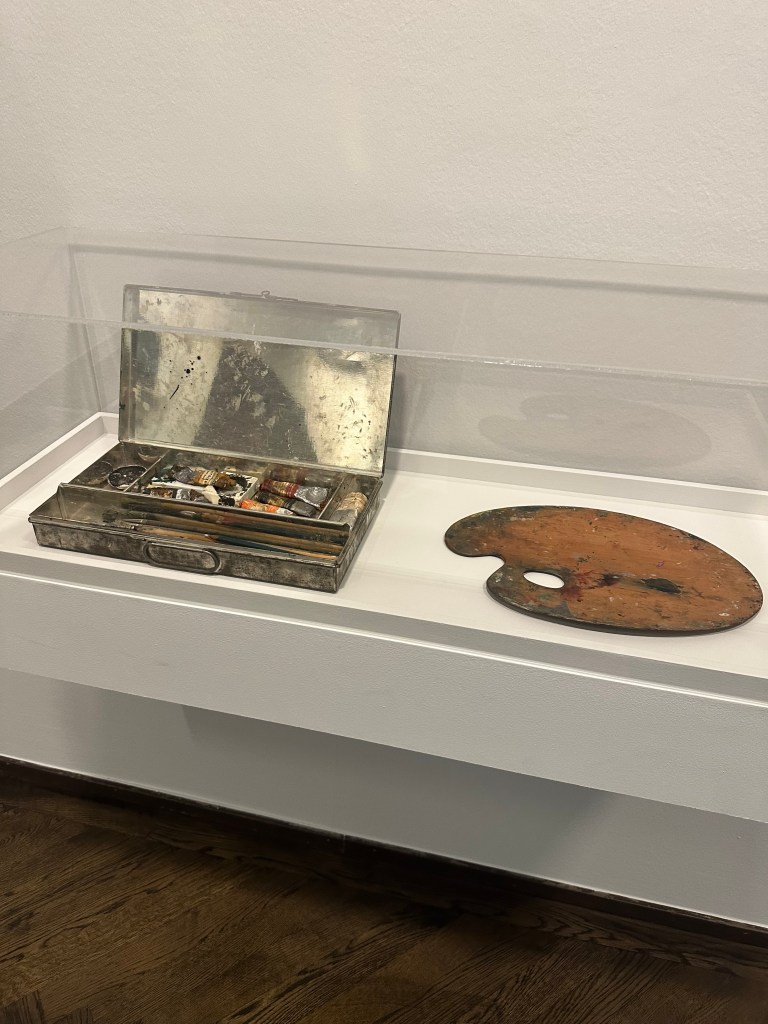
While this picture may not be much to look at (it is a well-used easel and paint box, after all!), these items hide an interesting personality, but perhaps not from the direction most would expect. These items all belonged to Arnold Schoenberg.
To those familiar with 20th-century counterculture that ran alongside the Secession, the name might ring a bell. But to all those scratching their heads, Schoenberg was the leading voice in the musical expressionist movement. Influential in progressing atonal music and creating his own musical scale known as 12-tone.
So, why the paint and easel, I hear you ask? Well, Schoenberg was something of a Renaissance man. Not content with mastering the inner mechanics of musical forms with ease, he took his talents to many different places over the course of his life. Aside from art being his second most successful talent, I took this picture as it perfectly encompassed my journey through Vienna. A city filled with art, music and culture, a snapshot from a multi-talented man summed up the city’s history in its entirety.
To date, the majority of Schoenberg’s artistic output can be found in his own museum, with the exception of his self-portrait, which hangs in the Leopold.





 Faceless One Blog
Leave a comment